
Agri Business Management: A Complete Guide for Modern Agriculture Business
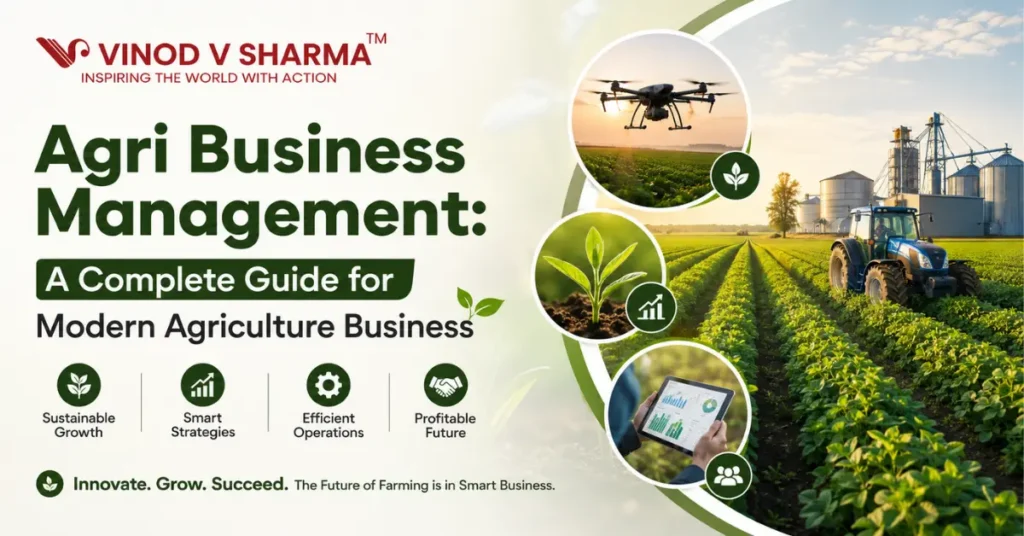
Agriculture is no longer limited to growing crops and selling them at the farm gate. Modern agriculture has evolved into a complex business ecosystem involving production, finance, technology, logistics, processing, marketing, exports, and investment. As global food demand increases and agricultural markets become more competitive, effective agri business management has become essential for building profitable, resilient, and sustainable agricultural enterprises. From small and medium-sized farms to large-scale commercial farming operations, successful agribusinesses require much more than agricultural knowledge. They need strategic planning, efficient resource management, financial discipline, market intelligence, technology adoption, and effective risk management. This comprehensive guide explores the fundamentals of agri business management, explains how the agricultural value chain works, examines modern management strategies, and highlights emerging opportunities for entrepreneurs, farmers, companies, and investors. What Is Agri Business Management? Agri business management, also known as agribusiness management, refers to the planning, organization, operation, and management of businesses connected to agriculture. It covers activities across the agricultural ecosystem, including: Agricultural production Farm management Input procurement Food processing Storage and warehousing Transportation and logistics Agricultural marketing Distribution Export and international trade Agricultural technology Financial management Investment and risk management In simple terms, agribusiness management focuses on how agricultural resources can be managed efficiently to create sustainable economic value. A modern agribusiness manager must understand both sides of the equation: the agricultural production process and the commercial market that ultimately determines demand, pricing, and profitability. Importance of Agribusiness in the Modern Economy Agriculture plays a critical role in food security, employment, rural development, international trade, and economic growth. However, producing agricultural commodities alone does not guarantee profitability. Farmers and agribusinesses must understand market demand, production costs, pricing, supply chains, quality requirements, and consumer preferences. Effective management can help businesses: Improve productivity Reduce unnecessary costs Increase profitability Minimize operational risks Improve product quality Access new markets Reduce post-harvest losses Strengthen supply chains Attract investment Build long-term business sustainability From Traditional Farming to Modern Agribusiness Traditional farming often focuses primarily on production. Modern agribusiness takes a broader approach by connecting production with markets, technology, finance, processing, and consumers. For example, a modern agricultural enterprise may begin by analyzing market demand, select crops based on commercial potential, use technology to monitor production, implement quality-control systems, process or package products, and sell them through domestic or international markets. This transformation has made business management an increasingly important part of agriculture. Understanding the Agribusiness Value Chain The agribusiness value chain represents the interconnected activities involved in taking an agricultural product from inputs and production to the final consumer. Understanding this chain helps businesses identify where value is created, where costs occur, and where opportunities for improvement or investment exist. Agricultural Inputs Agricultural production begins with inputs such as: Seeds Fertilizers Soil amendments Crop protection products Irrigation systems Farm machinery Animal feed Veterinary products Technology and farm-management tools Reliable access to quality inputs can directly influence agricultural productivity and product quality. Farm Production Production includes activities such as land preparation, planting, irrigation, crop protection, harvesting, and livestock management. Efficient production management focuses on maximizing output while using land, water, labour, capital, and other resources responsibly. Processing and Value Addition Raw agricultural commodities can often generate greater commercial value through processing. Examples include: Processing grains into packaged food products Converting fruits into juices or processed foods Processing milk into dairy products Converting oilseeds into edible oils Packaging fresh produce for premium markets Value addition can create additional revenue streams while reducing dependence on commodity-level pricing. Storage and Warehousing Proper storage is essential because many agricultural products are seasonal and perishable. Warehousing, temperature management, drying, grading, and appropriate packaging can help maintain product quality and reduce losses. Transportation and Logistics Agricultural products must move efficiently from farms to processors, distributors, retailers, exporters, or consumers. Poor transportation infrastructure can increase costs, cause delays, and contribute to product deterioration. Marketing and Distribution Marketing connects agricultural production with consumer demand. Businesses need to understand: Who their customers are What customers want How much they are willing to pay Where products should be sold How products should be positioned Which distribution channels are most effective Key Components of Agri Business Management Successful agribusiness management involves multiple interconnected functions. Production Management Production management ensures that agricultural resources are used efficiently to achieve planned production targets. Financial Management Financial management involves budgeting, cost control, cash-flow planning, financing, investment decisions, and profitability analysis. Marketing Management Marketing determines how agricultural products are positioned, priced, promoted, and distributed. Supply Chain Management Supply chain management coordinates inputs, production, storage, transportation, processing, and distribution. Human Resource Management Agricultural businesses depend on skilled and reliable workers. Effective workforce planning, training, supervision, and safety management are therefore important. Risk Management Agriculture faces numerous risks, including weather events, disease, market volatility, input-price fluctuations, and supply-chain disruptions. Technology Management Modern agricultural enterprises increasingly use digital tools, sensors, satellite data, automation, analytics, and farm-management platforms to improve decision-making. Agribusiness Planning and Strategy A strong business plan provides a roadmap for agricultural operations. Before starting or expanding an agribusiness, entrepreneurs and investors should evaluate the commercial opportunity carefully. Setting Business Goals Business objectives should be clear and measurable. Examples include: Increasing production Entering a new market Improving margins Expanding cultivated area Developing a processing facility Increasing exports Reducing production costs Developing an Agribusiness Plan A comprehensive agribusiness plan should typically include: Business overview Products or services Market analysis Production plan Operational requirements Human resources Marketing strategy Financial projections Risk assessment Growth strategy Market and Competitor Analysis Agribusiness decisions should be based on market realities rather than assumptions. Businesses should research: Market size Consumer demand Competitors Pricing trends Seasonal variations Import and export conditions Regulatory requirements Distribution channels Resource Planning Agricultural resources include land, water, labour, machinery, capital, technology, and infrastructure. The objective is to determine how these resources can be allocated efficiently without creating unnecessary costs. Farm and Agricultural Production Management Production management is at the heart of agricultural operations. Crop Planning and Selection Crop selection should consider factors such as: Climate Soil conditions Water
Agriculture Business Management: A Complete Guide to Building a Profitable Farm Business
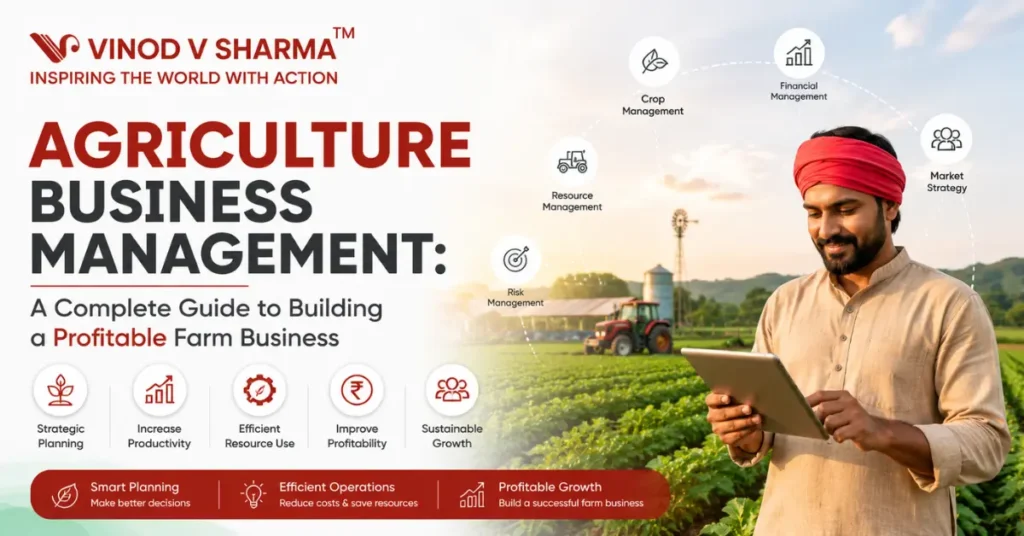
Agriculture is no longer only about producing crops or raising livestock. It is increasingly being managed as a structured business that requires planning, financial discipline, technology, market knowledge, risk management, and long-term strategy. Farmers, agribusiness entrepreneurs, investors, and agricultural enterprises that approach farming as a business can make better decisions, improve resource efficiency, reduce avoidable costs, and build sustainable revenue streams. In 2026, agriculture businesses operate in an environment shaped by changing consumer preferences, climate variability, input costs, evolving technology, supply-chain challenges, and increasingly sophisticated markets. As a result, effective agriculture business management has become an important factor in determining whether a farm simply survives or develops into a profitable and scalable enterprise. This comprehensive guide explains the fundamentals of agriculture business management, from creating a farm business plan and selecting land to managing finances, adopting technology, marketing products, controlling risks, and scaling an agricultural enterprise. Why Agriculture Business Management Matters in 2026 Agriculture remains one of the world’s most important economic activities, providing food, raw materials, employment, and income for millions of people. However, producing agricultural commodities alone does not guarantee profitability. A successful farm must answer several business questions: What should be produced? How much should be produced? Who will buy the products? What will production cost? What price can realistically be achieved? How should cash flow be managed? What risks could affect the business? How can productivity be improved? How can the business remain profitable during difficult market conditions? These questions form the foundation of agriculture business management. Modern farmers increasingly need to think like producers, entrepreneurs, financial managers, marketers, and supply-chain operators. Effective management can help convert agricultural resources into commercially viable operations while balancing profitability with environmental and social considerations. The objective is not simply to maximize production. It is to achieve the right combination of productivity, quality, cost efficiency, market access, profitability, and sustainability. What Is Agriculture Business Management? Agriculture business management is the process of planning, organizing, operating, financing, marketing, and controlling an agricultural enterprise to achieve defined business objectives. It covers decisions related to: Land and resource utilization Crop and livestock production Farm infrastructure Labor management Agricultural inputs Financial planning Procurement Supply chains Marketing and sales Technology adoption Risk management Regulatory compliance Sustainability Business expansion Agriculture business management applies traditional farming knowledge alongside modern business principles. For example, a farmer may know how to cultivate a particular crop successfully. However, business management requires additional questions: Is the crop commercially viable? What is the cost per acre? What is the expected selling price? Is there sufficient market demand? What happens if prices fall? Can the crop be stored? What are the logistics costs? This broader perspective transforms farming from a purely production-oriented activity into a managed agricultural business. Understanding the Modern Farm as a Business A modern farm can be viewed as a business system with several interconnected components. Inputs These may include: Land Seeds Fertilizers Water Machinery Labor Animal feed Energy Technology Working capital Production Inputs are converted into agricultural products such as: Grains Fruits Vegetables Dairy products Meat Eggs Poultry Fish Flowers Plantation crops Value Addition Agricultural products can sometimes generate greater commercial value through: Cleaning Grading Packaging Processing Branding Cold storage Product formulation Marketing and Distribution The finished products must reach buyers through suitable channels, including: Wholesalers Retailers Food processors Exporters Institutional buyers Supermarkets Restaurants Online platforms Direct consumers A profitable farm therefore requires coordination across the entire value chain. Key Components of Agriculture Business Management Effective agriculture business management involves several major areas. 1. Strategic Planning Strategic planning defines the long-term direction of the agricultural business. 2. Production Management Production management focuses on achieving the desired quantity and quality while using resources efficiently. 3. Financial Management Financial management involves budgeting, cash-flow planning, cost control, investment decisions, and profitability analysis. 4. Marketing Management Marketing determines how agricultural products are positioned, priced, promoted, and sold. 5. Supply Chain Management A well-managed supply chain helps agricultural products move efficiently from farms to markets while minimizing losses and unnecessary expenses. 6. Human Resource Management Farm labor must be planned, trained, supervised, and allocated efficiently. 7. Risk Management Agriculture faces weather, disease, market, financial, operational, and supply-chain risks. Businesses need strategies to identify and manage these risks. 8. Technology Management Technology can improve decision-making, monitoring, productivity, traceability, and resource efficiency when implemented appropriately. How to Create a Successful Farm Business Plan A farm business plan provides a roadmap for operating and developing an agricultural enterprise. A comprehensive plan should include the following elements: Executive Summary Briefly describe the agricultural business, its objectives, products, target market, and financial goals. Business Description Explain: Type of farming Farm location Scale of operations Ownership structure Target customers Competitive advantages Production Plan Specify: Crops or livestock Production cycles Expected output Required inputs Infrastructure Equipment Market Analysis Research: Customer demand Competitors Market prices Seasonal trends Distribution channels Potential buyers Financial Plan Estimate: Startup costs Operating expenses Expected revenue Working capital Cash flow Break-even point Profitability Risk Management Plan Identify potential threats and establish contingency strategies. A business plan should not be treated as a one-time document. It should be reviewed and updated as market conditions, costs, production capacity, and business objectives change. Choosing the Right Agricultural Business Model There is no single agricultural business model that is suitable for every entrepreneur or location. Potential models include: Crop Farming Growing cereals, pulses, oilseeds, vegetables, fruits, or other commercial crops. Livestock Farming Producing cattle, goats, sheep, or other livestock. Dairy Farming Generating revenue through milk production and potentially value-added dairy products. Poultry Farming Producing eggs or poultry meat. Horticulture Growing fruits, vegetables, flowers, herbs, and other high-value crops. Organic Farming Producing agricultural products using organic production systems and suitable certification where required. Greenhouse Farming Using controlled or semi-controlled environments to produce crops with greater control over growing conditions. Aquaculture Raising fish and other aquatic organisms for commercial purposes. Mixed Farming Combining multiple agricultural activities to diversify income and resource utilization. The appropriate model depends on land availability, climate, water, capital, expertise,
Top 10 Reasons to Invest in Corporate Farming in 2026

As the global population continues to grow and food demand reaches unprecedented levels, agriculture is emerging as one of the most promising investment sectors of the decade. In 2026, corporate farming is no longer viewed as a traditional agricultural business—it has become a modern, technology-driven investment opportunity that combines sustainability, innovation, and long-term financial growth. Corporate farming involves professionally managed agricultural operations that leverage advanced technologies such as precision farming, artificial intelligence (AI), smart irrigation, drones, and data-driven crop management to maximize productivity and efficiency. Unlike conventional farming, corporate farming emphasizes scalability, operational excellence, and consistent returns, making it an attractive option for both individual and institutional investors. Another major factor driving interest in corporate farming is the increasing focus on food security, sustainable agriculture, and environmental responsibility. Governments, financial institutions, and global organizations are investing heavily in agricultural modernization to ensure reliable food production while promoting responsible land management and efficient resource utilization. For investors, corporate farming offers more than just financial returns. It provides portfolio diversification, potential protection against inflation, and exposure to one of the world’s most essential industries. As agricultural land continues to appreciate in value and demand for high-quality food products increases, corporate farming is becoming an attractive long-term asset class. In this article, we’ll explore the Top 10 Reasons to Invest in Corporate Farming in 2026, highlighting the key benefits, market trends, potential risks, and why this sector is capturing the attention of investors worldwide. Whether you’re an experienced investor looking to diversify your portfolio or someone exploring alternative investment opportunities, understanding the potential of corporate farming can help you make informed investment decisions. What Is Corporate Farming Investment? Corporate farming investment is the practice of investing in professionally managed agricultural businesses that cultivate crops, manage farmland, and produce agricultural products on a commercial scale. Unlike traditional farming, which is typically operated by individual farmers or families, corporate farming is managed by experienced professionals who use modern technologies, advanced farming techniques, and business strategies to improve productivity, efficiency, and profitability. These farming enterprises often operate across large areas of agricultural land and focus on producing high-quality crops using sustainable practices. Investors provide capital to support land development, irrigation systems, farm equipment, technology adoption, and day-to-day operations. In return, they may earn returns through crop sales, profit sharing, land appreciation, or long-term business growth, depending on the investment model. One of the key strengths of corporate farming is its use of innovation. Technologies such as precision agriculture, artificial intelligence (AI), Internet of Things (IoT) sensors, drone monitoring, automated irrigation, and data analytics help optimize farming operations, reduce waste, and improve crop yields. These advancements make farming more predictable and scalable compared to traditional methods. Corporate farming also emphasizes sustainability. Many agricultural companies adopt environmentally responsible practices such as efficient water management, soil conservation, renewable energy, and responsible use of fertilizers and pesticides. This approach not only protects natural resources but also aligns with the growing demand for Environmental, Social, and Governance (ESG) investments. For investors, corporate farming offers exposure to an essential industry that benefits from rising global food demand, increasing agricultural innovation, and long-term land value appreciation. As populations grow and the need for reliable food production increases, professionally managed farming businesses are expected to play a vital role in the future of agriculture. In simple terms, corporate farming investment combines the stability of agriculture with the efficiency of modern business management, creating opportunities for long-term wealth creation while contributing to food security and sustainable economic development. Why 2026 Is the Right Time to Invest The agricultural sector is undergoing a major transformation, making 2026 one of the most promising years to invest in corporate farming. Rapid advancements in agricultural technology, increasing global food demand, supportive government policies, and the growing focus on sustainable investing are creating unprecedented opportunities for investors. Corporate farming has evolved beyond traditional agriculture into a modern, professionally managed industry capable of delivering long-term value and resilience. 1. Rising Global Food Demand The world’s population continues to grow, increasing the need for reliable and efficient food production. Urbanization, changing dietary preferences, and higher living standards are driving demand for quality agricultural products. Corporate farming businesses are well-positioned to meet this demand through large-scale operations, modern farming techniques, and efficient supply chains. 2. Rapid Technological Advancements Technology is revolutionizing agriculture. Precision farming, Artificial Intelligence (AI), Internet of Things (IoT) sensors, drone surveillance, automated irrigation, and data analytics are helping farmers maximize crop yields while reducing operational costs. These innovations improve productivity, minimize resource wastage, and enhance profitability, making corporate farming a more attractive investment than ever before. 3. Growing Focus on Sustainable Agriculture Consumers, businesses, and governments are placing greater emphasis on environmentally responsible farming practices. Corporate farming companies are increasingly adopting sustainable methods such as water conservation, renewable energy, organic soil management, and climate-smart agriculture. This aligns with the growing demand for Environmental, Social, and Governance (ESG) investments, making corporate farming an appealing choice for socially responsible investors. 4. Strong Government Support Many governments are prioritizing agricultural development through financial incentives, infrastructure improvements, technology adoption programs, irrigation projects, and policies that encourage private investment. These initiatives help strengthen the agricultural sector, reduce investment risks, and create a favorable environment for long-term growth. 5. Increasing Value of Agricultural Land Farmland has historically been a valuable long-term asset. As urban expansion continues and productive agricultural land becomes more limited, well-managed farmland has the potential to appreciate in value over time. Investors can benefit from both operational income generated through farming activities and long-term capital appreciation. 6. Greater Investor Interest in Alternative Assets Modern investors are increasingly seeking opportunities beyond traditional stocks, bonds, and real estate. Corporate farming offers portfolio diversification by providing exposure to an essential sector that is less directly correlated with many financial markets. Agriculture’s fundamental role in the global economy makes it a resilient investment during periods of economic uncertainty. 7. Improved Supply Chains and Global Market Access Digital marketplaces, better logistics, cold storage infrastructure, and expanding international
Top 10 Benefits of Investing in Corporate Farming in 2026

Corporate farming has emerged as one of the most promising investment opportunities in the global agricultural sector. As the world’s population continues to grow and food demand increases, traditional farming methods alone are no longer sufficient to meet future consumption needs. This has accelerated the adoption of large-scale, professionally managed farming operations that combine modern technology, sustainable practices, and efficient resource management. In 2026, corporate farming is attracting the attention of investors, governments, agribusiness companies, and financial institutions because it offers the potential for consistent long-term returns while addressing critical global challenges such as food security, climate resilience, and sustainable agriculture. Unlike conventional farming, corporate farming leverages advanced technologies such as precision agriculture, artificial intelligence (AI), drones, IoT sensors, satellite monitoring, automated irrigation systems, and data-driven farm management. These innovations help improve crop yields, reduce operational costs, optimize water and fertilizer usage, and minimize environmental impact. Another major factor driving global interest is the increasing demand for high-quality agricultural products. Rising incomes, urbanization, changing dietary preferences, and expanding international trade have created significant opportunities for large-scale farming enterprises to supply domestic and global markets efficiently. Governments across many countries are also encouraging agricultural modernization through supportive policies, infrastructure development, tax incentives, and public-private partnerships. At the same time, institutional investors, family offices, and private equity firms are increasingly viewing agriculture as a stable asset class that provides diversification and protection against inflation. Corporate farming also aligns with Environmental, Social, and Governance (ESG) investment principles. Sustainable farming practices, responsible land management, renewable energy adoption, and efficient resource utilization make corporate farming an attractive option for investors seeking both financial returns and positive environmental impact. As technology continues to transform agriculture and global food demand rises, corporate farming is evolving into a strategic investment sector with strong growth potential. For investors looking to participate in the future of agriculture, 2026 presents an ideal time to explore opportunities in this rapidly expanding industry. What is Corporate Farming? Corporate farming is a modern agricultural business model in which large-scale farming operations are owned, managed, or financed by companies, corporations, investment firms, cooperatives, or institutional investors rather than individual farmers. These enterprises operate with a commercial mindset, focusing on maximizing productivity, efficiency, sustainability, and profitability through advanced farming techniques and professional management. Unlike traditional farming, where small landowners manage limited acreage using conventional methods, corporate farming integrates large tracts of agricultural land, modern machinery, precision agriculture, data analytics, artificial intelligence (AI), automation, and scientific crop management to optimize production and reduce operational costs. The primary objective of corporate farming is not only to produce food but also to build a scalable and sustainable agricultural business that delivers consistent returns to stakeholders while meeting growing global food demand. Key Characteristics of Corporate Farming Large-Scale Operations: Cultivates extensive agricultural land to achieve higher production and operational efficiency. Professional Management: Managed by experienced agricultural experts, business professionals, and technical specialists. Technology-Driven Agriculture: Uses AI, IoT sensors, drones, satellite imagery, GPS-guided machinery, precision irrigation, and farm management software. Efficient Resource Utilization: Optimizes the use of water, fertilizers, pesticides, labor, and energy to reduce waste and increase productivity. Market-Oriented Production: Focuses on growing crops and producing agricultural commodities based on market demand and profitability. Sustainable Farming Practices: Incorporates environmentally responsible methods such as water conservation, soil health management, renewable energy, and integrated pest management. Integrated Supply Chain: Often manages the entire value chain, including cultivation, processing, storage, packaging, logistics, and distribution. How Corporate Farming Differs from Traditional Farming Farm Size Small to Medium Large-Scale Ownership Individual Farmers Companies or Investment Groups Management Family-Based Professional Management Teams Technology Basic or Conventional AI, IoT, Drones, Automation Investment Limited Capital Institutional and Private Investment Productivity Moderate High and Optimized Market Access Local Markets Domestic and International Markets Risk Management Limited Diversified and Data-Driven Profit Potential Seasonal Long-Term Commercial Growth Why Corporate Farming Matters Corporate farming plays a crucial role in addressing some of the world’s biggest agricultural challenges. With the global population expected to continue growing, there is increasing pressure to produce more food using fewer natural resources. Large-scale farming operations help improve productivity, enhance food security, reduce post-harvest losses, and support sustainable agricultural development. By combining innovation, efficient management, and responsible farming practices, corporate farming has become an attractive model for governments, agribusinesses, and investors seeking long-term growth while contributing to a more resilient and sustainable global food system. Why 2026 is the Right Time to Invest in Corporate Farming The global agricultural industry is undergoing a significant transformation, making 2026 one of the most attractive years to invest in corporate farming. Rising food demand, rapid technological innovation, government support, and increasing investor interest are creating a favorable environment for large-scale agricultural investments. As agriculture evolves into a technology-driven and commercially managed sector, corporate farming offers a unique opportunity to generate long-term wealth while contributing to global food security. 1. Growing Global Food Demand The world’s population continues to increase, driving higher demand for food, animal feed, biofuels, and agricultural raw materials. Urbanization, rising incomes, and changing dietary habits are placing additional pressure on global food production. Corporate farming is well-positioned to meet this demand through efficient, large-scale operations and modern agricultural practices. 2. Rapid Adoption of Agricultural Technology Technology is revolutionizing farming. Corporate farms are increasingly adopting Artificial Intelligence (AI), precision agriculture, drones, IoT sensors, satellite monitoring, automated irrigation, robotics, and data analytics to improve productivity and reduce costs. These innovations enable higher crop yields, better resource management, and improved profitability, making corporate farming a future-ready investment. 3. Increasing Government Support Many governments are prioritizing agriculture to strengthen food security and rural development. Investors can benefit from supportive policies such as tax incentives, subsidies, infrastructure development, irrigation projects, crop insurance programs, and public-private partnerships that encourage agricultural modernization and sustainable farming. 4. Rising Demand for Sustainable Investments Environmental, Social, and Governance (ESG) investing continues to gain momentum. Corporate farming aligns well with ESG principles by promoting responsible land management, efficient water use, renewable energy adoption, carbon reduction, and sustainable agricultural
Is Corporate Farming a Good Investment? Expert Insights for 2026

The global agricultural sector is undergoing a major transformation in 2026, and corporate farming is emerging as one of the most promising investment opportunities for investors looking beyond traditional asset classes. Rising food demand, population growth, climate challenges, and advancements in agricultural technology are driving increased interest from institutional investors, private equity firms, family offices, and high-net-worth individuals. Unlike traditional farming models that often depend on small-scale operations and unpredictable factors, corporate farming combines professional management, technology, scientific practices, and large-scale operations to improve productivity and profitability. By integrating precision agriculture, automation, data analytics, sustainable farming methods, and modern supply chain systems, corporate farms aim to create more predictable and scalable agricultural businesses. In 2026, investors are paying closer attention to agriculture because food security has become a strategic priority worldwide. Growing populations, changing dietary patterns, and increasing demand for high-quality food products are creating long-term opportunities across sectors such as organic farming, greenhouse cultivation, livestock management, agro-processing, and export-oriented agriculture. Another major factor attracting investors is the shift toward sustainable and responsible investments. Corporate farming projects that focus on efficient water management, renewable energy integration, regenerative agriculture, and environmentally friendly practices align with global ESG (Environmental, Social, and Governance) investment trends. With improved access to agricultural technology and professional farm management expertise, corporate farming is no longer viewed only as an agricultural activity—it is increasingly seen as a long-term investment strategy that combines land appreciation, operational income, and participation in the future of global food systems. As investors search for assets that can provide stability, diversification, and real-world value, corporate farming is gaining recognition as a strategic opportunity in the investment landscape of 2026. What Is Corporate Farming? Corporate farming refers to the large-scale production and management of agricultural activities by companies, investment groups, or professionally managed organizations rather than individual farmers operating independently. It involves applying corporate management practices, advanced technology, scientific farming techniques, and structured business models to agriculture. Unlike traditional farming, where decisions are often based on family experience and small-scale operations, corporate farming focuses on commercial agriculture with planned investments, operational efficiency, and measurable financial outcomes. Companies may own agricultural land, lease farmland, partner with farmers, or manage farming operations through contract farming models. Corporate farming can include a wide range of agricultural activities such as: Crop Production: Large-scale cultivation of grains, vegetables, fruits, spices, and cash crops. Organic and Sustainable Farming: Production of chemical-free and environmentally responsible agricultural products. Greenhouse and Controlled Environment Farming: Growing crops under controlled conditions to improve yield and quality. Livestock and Dairy Operations: Professional management of animal farming, dairy production, and related businesses. Agro-Processing and Supply Chains: Integrating farming with storage, packaging, processing, and distribution. Export-Oriented Agriculture: Producing high-value crops for international markets. A key feature of corporate farming is the use of modern agricultural technologies, including precision farming, satellite monitoring, artificial intelligence, automated irrigation systems, drones, and farm management software. These technologies help optimize resources, reduce waste, improve productivity, and increase profitability. Corporate farming also enables investors to participate in agriculture without directly managing day-to-day farming activities. Through professionally managed agricultural projects, investors can gain exposure to farmland, food production, and agribusiness growth while benefiting from structured operations and expert management. In 2026, corporate farming is increasingly viewed as a strategic investment model because it connects agriculture, technology, sustainability, and global food demand—creating opportunities for long-term value creation in one of the world’s most essential industries. How Corporate Farming Works Corporate farming operates by combining agricultural expertise, business management, technology, and investment capital to create efficient and scalable farming operations. Unlike traditional farming models, corporate farms follow structured planning, professional management systems, and data-driven decision-making to maximize productivity and profitability. The process typically involves the following key stages: 1. Land Acquisition or Partnership Corporate farming begins with securing suitable agricultural land through: Direct land ownership Long-term land leasing Partnerships with landowners Farmer collaboration models Companies evaluate factors such as soil quality, water availability, climate conditions, infrastructure, and market access before selecting farming locations. 2. Investment Planning and Farm Development After securing land, organizations develop a detailed farming plan covering: Crop selection Production cycles Investment requirements Technology adoption Expected yields and revenues Professional agricultural teams analyze market demand to select high-value crops and farming methods that offer better commercial potential. 3. Technology-Driven Farming Operations Modern corporate farms rely heavily on agricultural technology to improve efficiency, including: Precision Agriculture: Uses sensors, satellite data, and analytics to monitor soil health, crop growth, and resource usage. Smart Irrigation Systems: Optimizes water consumption through automated irrigation solutions. Drones and Remote Monitoring: Helps track crop conditions, detect diseases, and improve farm management. Artificial Intelligence & Data Analytics: Supports better decisions related to planting, harvesting, and yield forecasting. 4. Professional Farm Management Corporate farming operations are managed by teams of: Agricultural specialists Farm managers Agronomists Technology experts Supply chain professionals This professional approach helps reduce operational risks and ensures consistent production quality. 5. Production and Quality Control Large-scale farms implement standardized processes for: Seed selection Fertilizer and nutrient management Pest control Harvesting Quality testing Strict quality control systems help meet domestic and international food safety standards. 6. Processing, Storage, and Distribution Many corporate farms integrate the entire agricultural value chain, including: Cold storage facilities Packaging units Food processing Logistics networks Export channels This integration allows companies to capture additional value beyond primary farm production. 7. Revenue Generation and Investor Returns Corporate farming generates income through multiple channels: Sale of agricultural products Export opportunities Processed food products Long-term supply contracts Carbon credits and sustainability-linked incentives (where applicable) Land value appreciation Investors typically participate through equity investments, managed farming projects, agricultural funds, or partnerships with farming companies. Why This Model Attracts Investors in 2026 Corporate farming creates a bridge between traditional agriculture and modern business models. By combining professional management, technology, and growing global food demand, it offers investors an opportunity to participate in a sector that is essential, scalable, and increasingly driven by innovation. Why Corporate Farming Is Becoming Popular in 2026 In 2026, corporate


