
Is Corporate Farming a Good Investment? Expert Insights for 2026
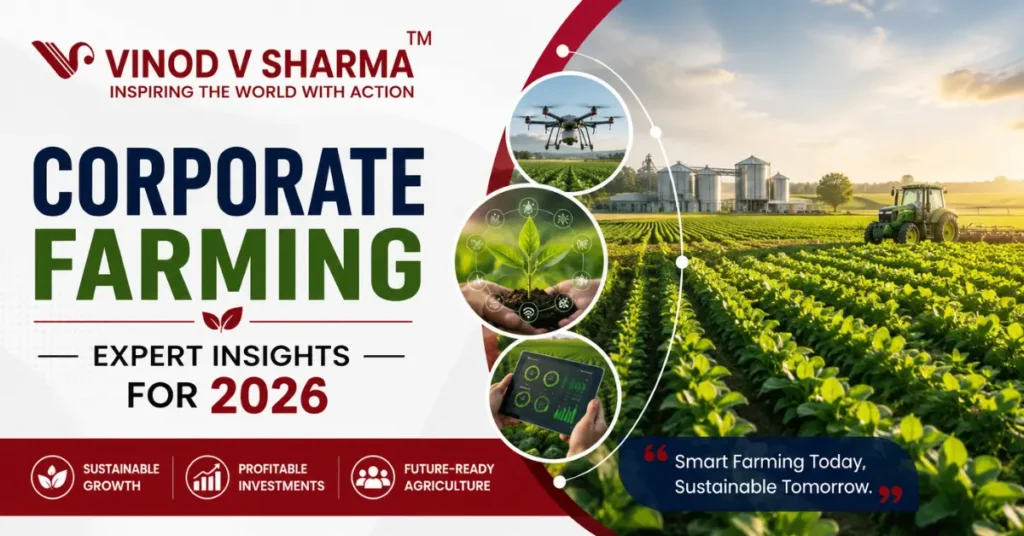
The global agricultural sector is undergoing a major transformation in 2026, and corporate farming is emerging as one of the most promising investment opportunities for investors looking beyond traditional asset classes. Rising food demand, population growth, climate challenges, and advancements in agricultural technology are driving increased interest from institutional investors, private equity firms, family offices, and high-net-worth individuals. Unlike traditional farming models that often depend on small-scale operations and unpredictable factors, corporate farming combines professional management, technology, scientific practices, and large-scale operations to improve productivity and profitability. By integrating precision agriculture, automation, data analytics, sustainable farming methods, and modern supply chain systems, corporate farms aim to create more predictable and scalable agricultural businesses. In 2026, investors are paying closer attention to agriculture because food security has become a strategic priority worldwide. Growing populations, changing dietary patterns, and increasing demand for high-quality food products are creating long-term opportunities across sectors such as organic farming, greenhouse cultivation, livestock management, agro-processing, and export-oriented agriculture. Another major factor attracting investors is the shift toward sustainable and responsible investments. Corporate farming projects that focus on efficient water management, renewable energy integration, regenerative agriculture, and environmentally friendly practices align with global ESG (Environmental, Social, and Governance) investment trends. With improved access to agricultural technology and professional farm management expertise, corporate farming is no longer viewed only as an agricultural activity—it is increasingly seen as a long-term investment strategy that combines land appreciation, operational income, and participation in the future of global food systems. As investors search for assets that can provide stability, diversification, and real-world value, corporate farming is gaining recognition as a strategic opportunity in the investment landscape of 2026. What Is Corporate Farming? Corporate farming refers to the large-scale production and management of agricultural activities by companies, investment groups, or professionally managed organizations rather than individual farmers operating independently. It involves applying corporate management practices, advanced technology, scientific farming techniques, and structured business models to agriculture. Unlike traditional farming, where decisions are often based on family experience and small-scale operations, corporate farming focuses on commercial agriculture with planned investments, operational efficiency, and measurable financial outcomes. Companies may own agricultural land, lease farmland, partner with farmers, or manage farming operations through contract farming models. Corporate farming can include a wide range of agricultural activities such as: Crop Production: Large-scale cultivation of grains, vegetables, fruits, spices, and cash crops. Organic and Sustainable Farming: Production of chemical-free and environmentally responsible agricultural products. Greenhouse and Controlled Environment Farming: Growing crops under controlled conditions to improve yield and quality. Livestock and Dairy Operations: Professional management of animal farming, dairy production, and related businesses. Agro-Processing and Supply Chains: Integrating farming with storage, packaging, processing, and distribution. Export-Oriented Agriculture: Producing high-value crops for international markets. A key feature of corporate farming is the use of modern agricultural technologies, including precision farming, satellite monitoring, artificial intelligence, automated irrigation systems, drones, and farm management software. These technologies help optimize resources, reduce waste, improve productivity, and increase profitability. Corporate farming also enables investors to participate in agriculture without directly managing day-to-day farming activities. Through professionally managed agricultural projects, investors can gain exposure to farmland, food production, and agribusiness growth while benefiting from structured operations and expert management. In 2026, corporate farming is increasingly viewed as a strategic investment model because it connects agriculture, technology, sustainability, and global food demand—creating opportunities for long-term value creation in one of the world’s most essential industries. How Corporate Farming Works Corporate farming operates by combining agricultural expertise, business management, technology, and investment capital to create efficient and scalable farming operations. Unlike traditional farming models, corporate farms follow structured planning, professional management systems, and data-driven decision-making to maximize productivity and profitability. The process typically involves the following key stages: 1. Land Acquisition or Partnership Corporate farming begins with securing suitable agricultural land through: Direct land ownership Long-term land leasing Partnerships with landowners Farmer collaboration models Companies evaluate factors such as soil quality, water availability, climate conditions, infrastructure, and market access before selecting farming locations. 2. Investment Planning and Farm Development After securing land, organizations develop a detailed farming plan covering: Crop selection Production cycles Investment requirements Technology adoption Expected yields and revenues Professional agricultural teams analyze market demand to select high-value crops and farming methods that offer better commercial potential. 3. Technology-Driven Farming Operations Modern corporate farms rely heavily on agricultural technology to improve efficiency, including: Precision Agriculture: Uses sensors, satellite data, and analytics to monitor soil health, crop growth, and resource usage. Smart Irrigation Systems: Optimizes water consumption through automated irrigation solutions. Drones and Remote Monitoring: Helps track crop conditions, detect diseases, and improve farm management. Artificial Intelligence & Data Analytics: Supports better decisions related to planting, harvesting, and yield forecasting. 4. Professional Farm Management Corporate farming operations are managed by teams of: Agricultural specialists Farm managers Agronomists Technology experts Supply chain professionals This professional approach helps reduce operational risks and ensures consistent production quality. 5. Production and Quality Control Large-scale farms implement standardized processes for: Seed selection Fertilizer and nutrient management Pest control Harvesting Quality testing Strict quality control systems help meet domestic and international food safety standards. 6. Processing, Storage, and Distribution Many corporate farms integrate the entire agricultural value chain, including: Cold storage facilities Packaging units Food processing Logistics networks Export channels This integration allows companies to capture additional value beyond primary farm production. 7. Revenue Generation and Investor Returns Corporate farming generates income through multiple channels: Sale of agricultural products Export opportunities Processed food products Long-term supply contracts Carbon credits and sustainability-linked incentives (where applicable) Land value appreciation Investors typically participate through equity investments, managed farming projects, agricultural funds, or partnerships with farming companies. Why This Model Attracts Investors in 2026 Corporate farming creates a bridge between traditional agriculture and modern business models. By combining professional management, technology, and growing global food demand, it offers investors an opportunity to participate in a sector that is essential, scalable, and increasingly driven by innovation. Why Corporate Farming Is Becoming Popular in 2026 In 2026, corporate


